

This article is part of the “Path of Cleansing” series, which shows step-by-step where overloading the body comes from and how to consciously guide the process of regaining health, energy and stability.
Many people have been struggling with similar symptoms for years:
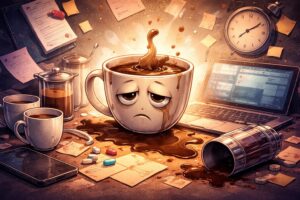
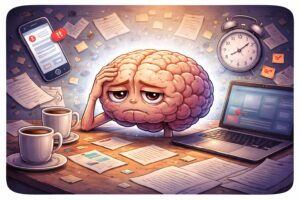
chronic fatigue, drops in energy, foggy head, tension, digestive problems or lowered immunity.
Most often they then hear:
that it’s stress, age, psychology or the pace of life.
Meanwhile, in a great many cases, the source of the problem lies elsewhere.
Not in the head.
Not in the character.
But in the biological load on the body.
Everyone’s body comes into contact with factors that gradually overload it.
This does not happen suddenly, but builds up over the years.
Among the most common are:
– parasites
– bacteria and fungi
– environmental toxins
– heavy metals
– metabolic products of pathogens
These stresses rarely produce acute, unambiguous symptoms.
Much more often they cause a state of chronic overload, which the body tries to compensate for.
The effect is to operate “on reserve.”
Parasites are not an exotic or rare problem.
They occur much more frequently than is commonly believed.
Living in the intestines and tissues:
– use host nutrients
– secrete toxins
– disrupt the gut and immune system
The body, instead of regenerating and rebuilding,
is forced to constantly react.
This often leads to:
– Fatigue with no apparent cause
– mood swings
– digestive problems
– drops in concentration
– lowered immunity
This is not a “lack of strong willpower” problem.
It’s a biological problem.
Water, food, air, cosmetics, environment.
Contact with toxins is virtually unavoidable today.
The body can handle them up to a certain point.
After that, it starts operating in energy-saving mode.
Toxins and heavy metals:
– put a strain on the liver
– disrupts hormones
– affects the nervous system
– reduces energy production in cells
The result is the feeling that the body “can’t keep up,”
despite the fact that the lifestyle is theoretically correct.
Biofilm is a protective structure formed by bacteria, fungi and parasites.
It acts as a barrier that makes it difficult for the organism and external agents to reach pathogens.
If biofilm is present:
– The immune system does not see a real problem
– drugs and supplements work poorly
– symptoms go away only temporarily
– problems return after time
This is one of the main reasons why many people say:
“I’ve tried everything.”
The problem lies not in the lack of consistency,
but in the fact that the cause remains untouched.
When the body is overloaded:
– The nervous system goes into alarm mode
– regeneration is pushed to the background
– sleep loses its restorative function
– energy is diverted to survival, not restoration
The body is doing exactly what it should under the given conditions.
It does not “break down.”
It protects itself.
Understanding Step 2 changes the perspective.
Health and energy problems:
– are not random
– are not the result of a weak psyche
– are not human failures
They are the body’s logical response to prolonged overload.
Until this burden is recognized and breached,
further action will have limited effectiveness.
In the next step, we will look at
why the body does not regenerate despite “good habits“
and what exactly blocks the recovery process at the cellular level.
👉 S tep 3: Why the body does not recover despite good habits
This is where understanding begins,
why diet, supplements and lifestyle alone are often not enough.



We use cookies to improve your experience on our site. By using our site, you consent to cookies.
Manage your cookie preferences below:
Essential cookies enable basic functions and are necessary for the proper function of the website.
These cookies are needed for adding comments on this website.
Google Tag Manager simplifies the management of marketing tags on your website without code changes.
Statistics cookies collect information anonymously. This information helps us understand how visitors use our website.
Google Analytics is a powerful tool that tracks and analyzes website traffic for informed marketing decisions.
Service URL: policies.google.com (opens in a new window)
SourceBuster is used by WooCommerce for order attribution based on user source.