

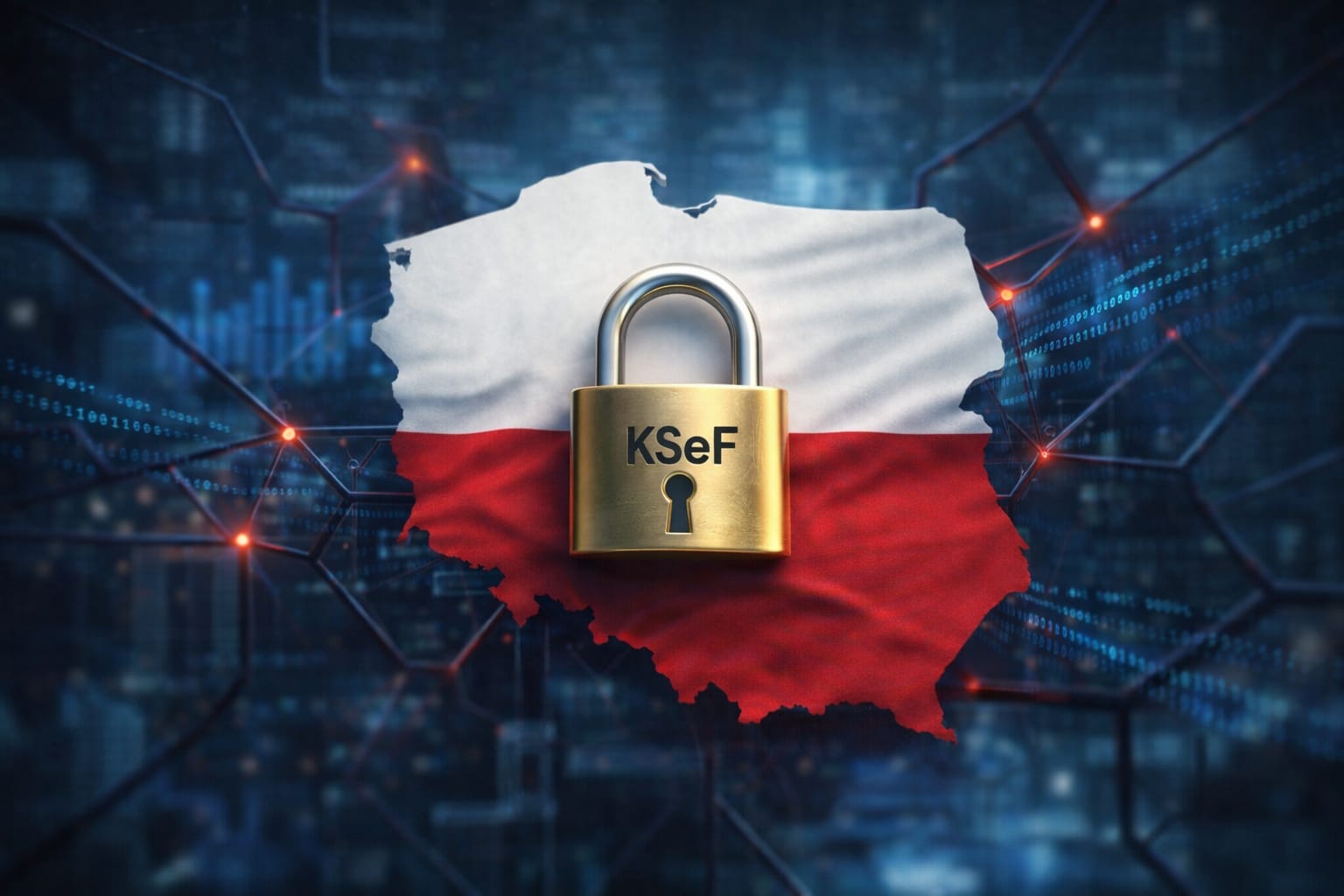
The discussion around the National e-Invoicing System (KSeF) is conducted in a surprisingly superficial manner. The Ministry of Finance talks about “sealing the system,” “digitization,” “facilitating business” and “aligning with European standards.” Accountants analyze API integrations, XML structures and implementation schedules. Entrepreneurs – tired of more obligations – are shrugging their shoulders and saying, “another requirement, somehow it will be done.”
Meanwhile, the most important dimension of the KSeF is almost completely overlooked:
its impact on the real freedom of doing business.
Because KSeF is not just a technical system. It is a change in the architecture of the relationship between the state and the entrepreneur. A change that has consequences far beyond taxes and invoicing.
In the Polish legal order, freedom of economic activity is not a courtesy of the state to the citizen. It is a systemic principle.
The Polish Constitution (Articles 20 and 22) indicates clearly:
That last word is key.
Freedom of economic activity does not consist of the state “letting you act.” It relies on the entrepreneur to act independently, and the state:
In a healthy legal system, the state does not mediate every transaction, is not a permanent participant in trading, and does not technically decide whether an activity can happen.
KSeF is radically changing this model.
It is no longer:
KSeF is becoming a technical condition for the existence of business trading, especially in B2B relations.
If:
then in legal and economic terms the transaction does not exist.
This means that the possibility of doing business:
This is the point where neutral digitization ends and systemic dependence begins.
Any centralized system has two features:
KSeF combines both.
If all legal economic turnover goes through one system, then:
to cripple the company’s operations within hours, without physical inspections, without sealing the premises, without publicity.
The entrepreneur formally “may act,” but:
This is not regulation. This is a technical shutdown of operational capacity.
A key element of economic freedom is the ability to choose the form of action within the law.
KSeF does not leave that choice.
It does not exist:
This means that the state:
In practice, the entrepreneur does not operate “within the law,” but through the state infrastructure, which may be:
This is a fundamental violation of the idea of freedom of business.
The argument that “it’s just a tool” and “it’s all up to the people” sounds reassuring – but is historically naive.
The COVID-19 pandemic showed that:
Catering, fitness, culture, tourism – all of these were excluded by administrative decision.
The difference is that back then the state banned activities, but could not technically shut them down. There was always some margin of survival, legal or semi-formal.
KSeF eliminates this margin.
KSeF enables a new type of control:
Enough is enough:
The system does not scream. It doesn’t threaten. It doesn’t use force.
It simply cuts off the entrepreneur’s ability to live off his own work.
This is a power that is cheaper, more effective and more difficult to challenge than classical repression.
Even if one considers that:
then a fundamental question arises:
Is the creation of a system that allows full, ongoing control and technical exclusion of trading a proportionate measure?
Constitutional law answers clearly:
KSeF is not such a measure. This is because it creates the potential for power far greater than the stated fiscal goal.
KSeF can be introduced by law.
It can be formally legal.
It can operate “according to procedures.”
This, however, does not mean that:
History teaches that the tools of control rarely go unused once there is a crisis, public fear or “higher necessity.”
Therefore, the real debate about KSeF should not be about:
It should address one question:
Should the state be technically able to shut down a business with one click?
Because the moment the state controls:
controls everything.
And then the question is no longer “will it improve the system,” but:
When will someone see fit to use this control ?



We use cookies to improve your experience on our site. By using our site, you consent to cookies.
Manage your cookie preferences below:
Essential cookies enable basic functions and are necessary for the proper function of the website.
These cookies are needed for adding comments on this website.
Google Tag Manager simplifies the management of marketing tags on your website without code changes.
Statistics cookies collect information anonymously. This information helps us understand how visitors use our website.
Google Analytics is a powerful tool that tracks and analyzes website traffic for informed marketing decisions.
Service URL: policies.google.com (opens in a new window)
SourceBuster is used by WooCommerce for order attribution based on user source.