
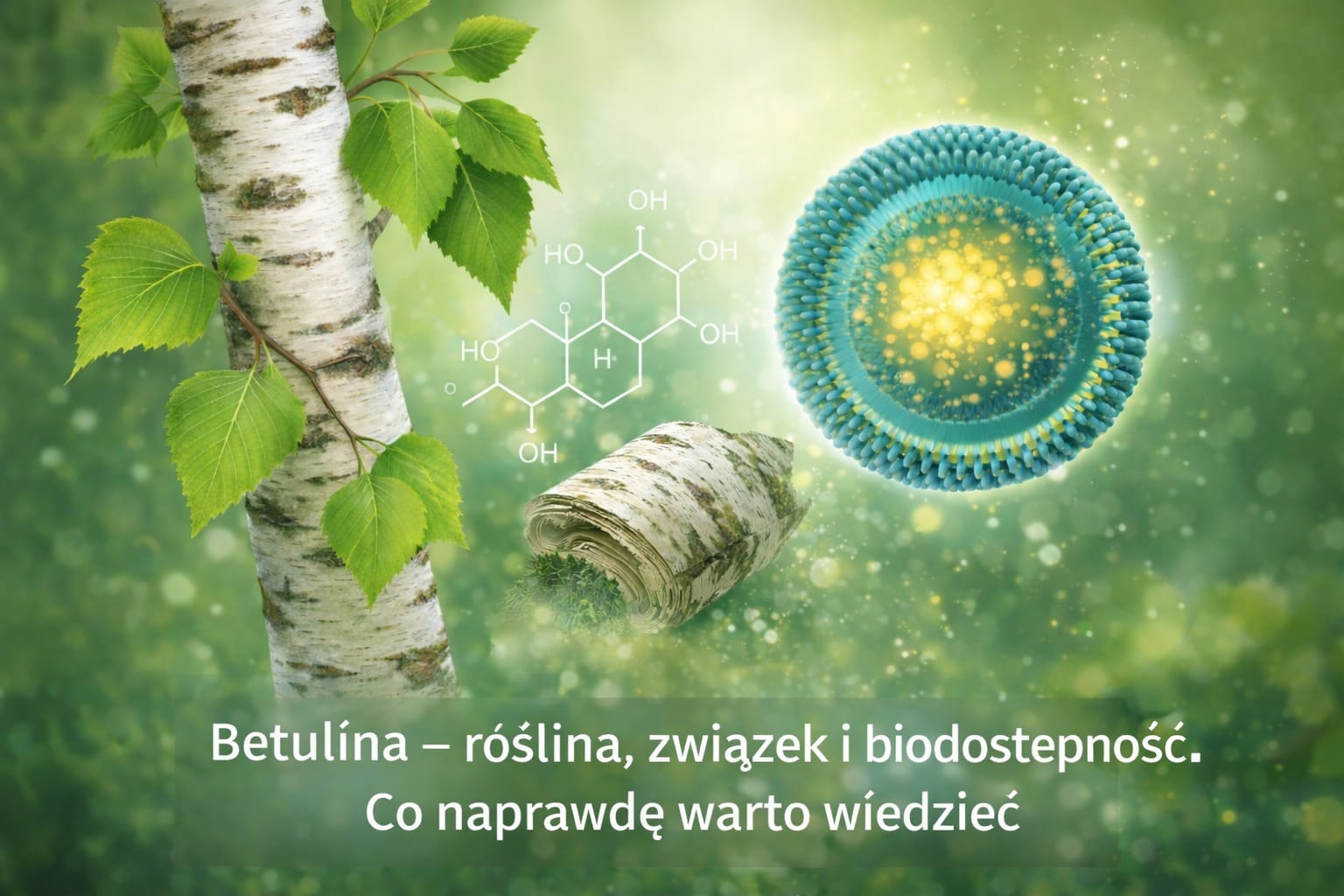
Betulin is a triterpene plant compound whose biological activity and bioavailability depend on the method of extraction and form of administration.
This article is intended to educate and organize knowledge. Its purpose is to explain what betulin is, what role it plays in the plant matrix, why its form is crucial, and why simplistic product descriptions do not reflect the actual biological context.
Betulin occurs naturally in the bark of trees of the genus Betula (birch). It is one of the main components of the outer layer of the bark, performing a protective function in the plant against environmental factors, microorganisms and oxidative stress.
The herbal raw material is birch bark, from which betulin is extracted through extraction processes. Its content in the bark can vary depending on the species of birch, growth conditions and how the raw material is processed.
Betulin does not function in isolation. It is part of a complex phytochemical matrix of birch bark in which are also present:
It is the co-occurrence and synergy of these compounds that determine the biological character of the raw material, not a single substance considered in isolation.
Although betulin is the most commonly mentioned component of birch bark, it does not give the full picture of the biological activity of the raw material.
In phytotherapeutic practice, the importance is:
As in the case of knotweed, reducing betulin solely to “mg amount” leads to simplifications that do not take into account the biological complexity of the raw material.
Betulin is characterized by:
This means that the amount taken in is not equivalent to the amount used biologically.
For this reason, modern phytotherapy is paying increasing attention to:
For a broader discussion of the mechanisms of carrier forms and their impact on bioavailability, see the article on herbal liposomal preparations.
Betulin can be found in various forms:
Each of these forms differs in bioavailability, stability and predictability of action.
There is no single “best” form of betulin for everyone. The key is to match the technology to the nature of the compound and the purpose of its use.
Product charters are subject to certain legal and language restrictions. For this reason:
That’s why some of the knowledge needs to function outside the product sheet – in the form of educational articles like this one.
In herbal practice, betulin is rarely used as the only element. Most often it is considered:
This approach is closer to biology than simplistic numerical comparisons.
Betulin is a biologically complex compound whose potential does not fit into simple buzzwords or tables.
Its meaningful use requires consideration:
Therefore, modern phytotherapy is increasingly moving away from thinking in terms of “quantity” and focusing on form, quality and the biological pathway.
If you want to delve deeper into the topic of technology for increasing the bioavailability of plant compounds, take a look at the “Liposomal Knowledge” section.
Betulin is not an ad hoc compound. Its profile fits in:
Therefore, in practice, the importance is always emphasized:
Betulin is an example of a compound that shows how form and technology determine real biological action.
Talking about betulin only makes sense when it goes beyond simplifications and takes into account:
Technology in practice
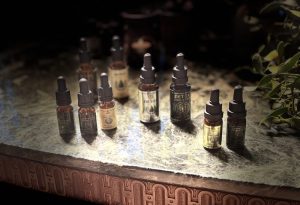
An example of the use of betulin in modern liposomal form is the preparation:
Betulin – Light of the Birch
This is a finished product developed based on the approach to bioavailability and working with plant extracts described in the article.
View product details:
Betulin – Birch Light
.
If this topic is important to you
Leave your email – I’ll let you know when there are new articles
and materials on the site.
No spam. Only valuable content.



We use cookies to improve your experience on our site. By using our site, you consent to cookies.
Manage your cookie preferences below:
Essential cookies enable basic functions and are necessary for the proper function of the website.
These cookies are needed for adding comments on this website.
Google Tag Manager simplifies the management of marketing tags on your website without code changes.
Statistics cookies collect information anonymously. This information helps us understand how visitors use our website.
Google Analytics is a powerful tool that tracks and analyzes website traffic for informed marketing decisions.
Service URL: policies.google.com (opens in a new window)
SourceBuster is used by WooCommerce for order attribution based on user source.