
Parasites are organisms that live at the expense of their host, using its resources to survive and reproduce. In the natural world, they are a natural phenomenon and occur in almost every ecosystem. Humans, too, have been in contact with various forms of parasites for thousands of years, which can appear in the environment, food, water or soil.
Modern lifestyles have led many people to assume that the parasite problem mainly affects countries with lower levels of hygiene. In reality, however, contact with various microorganisms, including parasites, can occur all over the world. Parasite infection does not always mean serious health problems, but in some cases it can affect the functioning of the body and its biological balance.
Understanding how parasites can enter the body is an important part of health knowledge. This makes it easier to understand the mechanisms of their presence and the factors that may increase or decrease the risk of contact with them.
In this article, we will take a closer look at how parasite infections occur, the most common routes of transmission, and what situations can promote the body’s contact with these organisms.
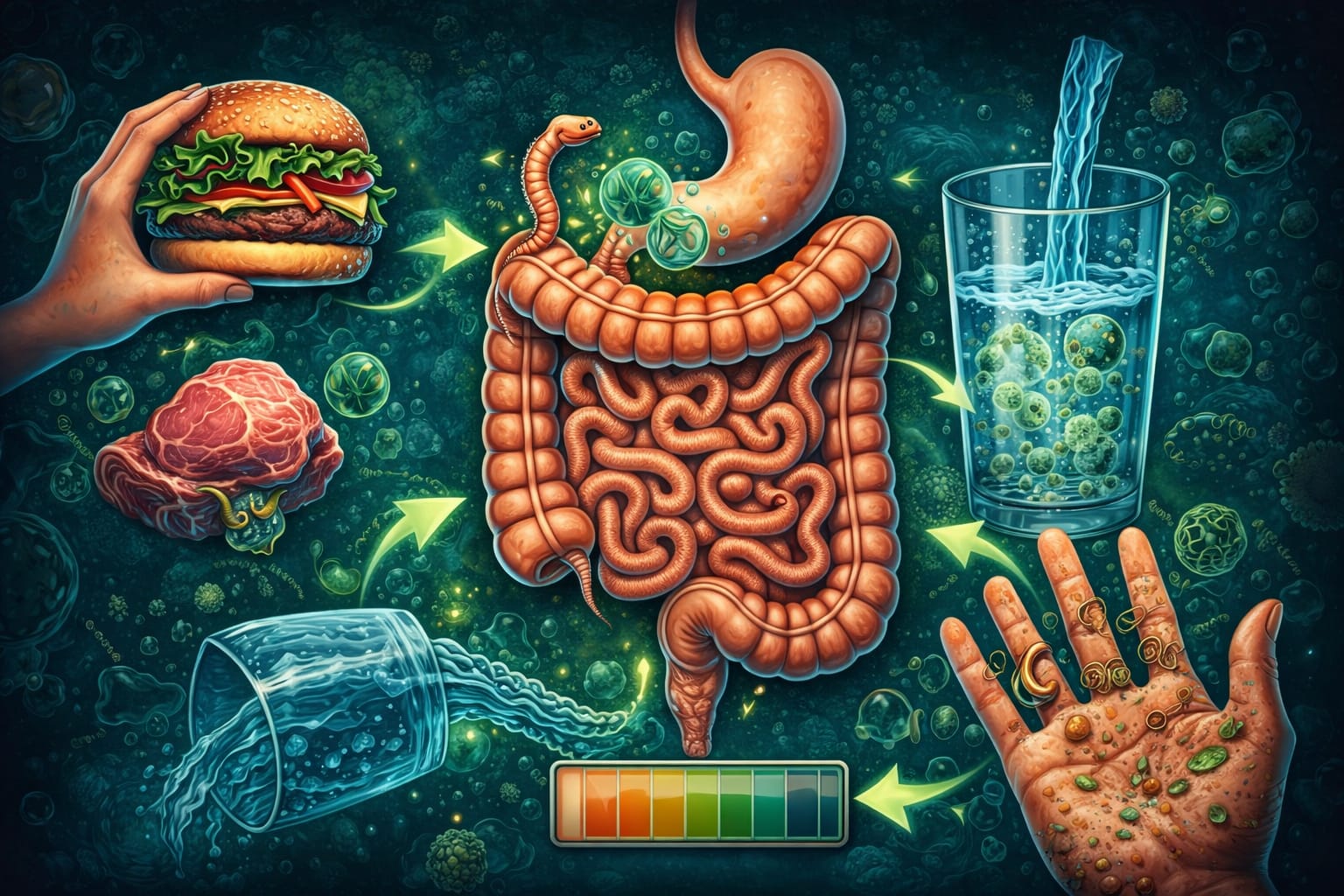
Parasites can enter the body in a variety of ways. Many take advantage of natural routes of human contact with the environment, such as eating, drinking, contact with soil or contact with animals.
It is worth remembering that the human body has numerous defense mechanisms that help deal with various microorganisms. The immune system, the gut microbiome and the body’s physical barriers play an important role in maintaining biological balance.
However, in certain situations, parasites can enter the body and begin their life cycle. Depending on the species of parasite, the route of infection may look different.
Some parasites enter the body with food or water, others through contact with contaminated soil, and still others through contact with animals.
There are several main routes by which parasites can enter the human body. In practice, this means that contact with them can be associated with various elements of daily life.
One of the most commonly discussed routes of contact with parasites is through food. Some parasites can be found in raw or undercooked foods.
This includes:
In the environment, parasite eggs can be found in the soil or on the surface of plants. If food products are not properly prepared or washed, there is a possibility of contact with them.
Therefore, many food hygiene recommendations emphasize the importance of thorough washing of food products and proper thermal processing.
Water is another environment where a variety of microorganisms, including some parasites, can be found. In regions with limited access to clean drinking water, the problem may be more pronounced.
However, in other parts of the world, too, contact with microorganisms present in the water can happen, especially in the case of:
In many countries, water treatment systems significantly reduce the risk of microorganisms, but awareness of potential sources of contact remains important.
Soil is a natural habitat for many organisms. It is home to bacteria, fungi and various life forms that play an important role in the ecosystem.
Under certain conditions, parasite eggs can also be found there. Contact with soil can occur during:
For this reason, the importance of washing hands after contact with soil and taking care of basic hygiene is often stressed.
Domestic and farm animals can be natural carriers of various microorganisms. In most cases this is not a problem, but in certain situations there may be transmission of some organisms to humans.
Contact with animals is part of many people’s lives and brings many benefits. At the same time, it is worth remembering the basic principles of hygiene, such as:
Such measures help maintain balance and reduce the risk of transmission of various microorganisms.
One of the reasons why the subject of parasites can sometimes be difficult to clearly identify is that their presence does not always cause clear symptoms.
The human body has many adaptive and defense mechanisms. In many cases, minor disorders can be compensated for by the body’s natural regulatory processes.
Therefore, sometimes the presence of parasites may not give clear signals. In other cases, symptoms may be nonspecific and difficult to link to one specific cause.
Symptoms associated with the presence of parasites can be varied and depend on many factors, such as:
Symptoms that are sometimes described in the context of parasites include:
However, it is worth remembering that similar symptoms can have many different causes. Therefore, it is important to always look at the body in a holistic way.
In recent years, more and more attention has been paid to the role of the gut and microbiome in maintaining the body’s balance. The gut is not only the site of food digestion, but also an important part of the immune system.
The microorganisms that inhabit the gut form a complex ecosystem that influences many biological processes. Microbial balance can make a difference in body function, energy levels and overall well-being.
For this reason, the topic of the gut often comes up in the context of various factors affecting health.
The risk of coming into contact with various microorganisms can be related to many lifestyle elements. Some of the most important include:
Taking care of the body’s balance and healthy habits can support the body’s natural defenses.
One of the most important elements of taking care of your health is awareness. Understanding how the body functions and what factors can affect it allows you to make more informed decisions.
Basic hygiene, attention to diet and attentiveness to signals sent by the body can play an important role in maintaining biological balance.
Parasites are a natural part of the environment and have coexisted with various organisms, including humans, for thousands of years. They can enter the body in a variety of ways, including through food, water, contact with soil or contact with animals.
In many cases, the body copes with various microorganisms through its natural defense mechanisms. At the same time, awareness of the possible routes of contact with parasites can help to better understand the functioning of the body and the importance of lifestyle and hygiene.
Can parasites be contracted through food?
Yes, some parasites can enter the body with unwashed vegetables, fruits or improperly prepared food.
Can parasites be found in water?
Some microorganisms, including parasites, can be found in water, especially in the wild.
Does contact with animals increase the risk of contact with parasites?
Contact with animals is a natural part of life, but as with other microorganisms, it is important to follow basic hygiene rules.
If you’re interested in the topic of parasites and their effects on the body, it’s also worth exploring other articles discussing the issue more broadly.
1️⃣ Symptoms of parasites in humans – how to recognize them and why they are not always obvious
2️⃣ How parasite infection occurs – the most common routes of infection
3️⃣ Parasites and chronic fatigue – can they cause lack of energy?
4️⃣ Parasites and intestinal problems
5️⃣ Parasites and skin problems
6️⃣ Parasites in your life
7️⃣ How to find out if you have parasites – symptoms and tests



We use cookies to improve your experience on our site. By using our site, you consent to cookies.
Manage your cookie preferences below:
Essential cookies enable basic functions and are necessary for the proper function of the website.
These cookies are needed for adding comments on this website.
Google Tag Manager simplifies the management of marketing tags on your website without code changes.
Statistics cookies collect information anonymously. This information helps us understand how visitors use our website.
Google Analytics is a powerful tool that tracks and analyzes website traffic for informed marketing decisions.
Service URL: policies.google.com (opens in a new window)
SourceBuster is used by WooCommerce for order attribution based on user source.