
The skin is the largest organ of the human body and performs many important functions. It provides a protective barrier for the body, is involved in temperature regulation and is part of the immune system. At the same time, the skin often reacts to changes occurring inside the body.
In practice, this means that various processes in the body can be reflected precisely in the condition of the skin. Digestive problems, hormonal disorders, chronic stress or nutrient deficiencies can affect its appearance and function.
The health literature also raises the topic of a possible link between skin condition and the presence of various microorganisms in the body, including parasites. Parasites are organisms that live at the expense of their host, using its resources to survive and reproduce. In the environment, they are part of the ecosystem and are found in water, soil, food or animal organisms.
In certain situations, they can also appear in the human body. In the context of skin health, this topic is sometimes discussed in connection with various dermatological symptoms, which do not always have a clear cause.
In this article, we will take a closer look at whether parasites can affect the condition of the skin, what skin symptoms are sometimes discussed in this context, and why the skin often reflects the overall condition of the body.
The skin is not just the outer shell of the body. It is a dynamic organ that responds to numerous processes in the body. For this reason, skin changes can often be a signal that certain processes are taking place in the body.
Some of the factors that can affect the condition of the skin include:
The modern approach to health increasingly involves looking at the body in a holistic way. This means that skin changes can be related not only to external factors, but also to processes inside the body.
That’s why the topic of skin often comes up in the context of gastrointestinal function, immunity and the body’s microbial balance.
Parasites are organisms that live at the expense of their host. In the natural world, they are a natural phenomenon and are found in almost every ecosystem.
Depending on the species of parasite, their life cycle may proceed in different ways. Some may appear in the digestive system, others in the body’s tissues, and still others in specific organs.
Human contact with parasites can occur through, among other things:
You can read more about the routes of infection in the article:
How parasite infection occurs – the most common routes of infection
However, the human body has numerous defense mechanisms that help deal with various microorganisms. The immune system, the gut microbiome and the body’s physical barriers play an important role in maintaining biological balance.
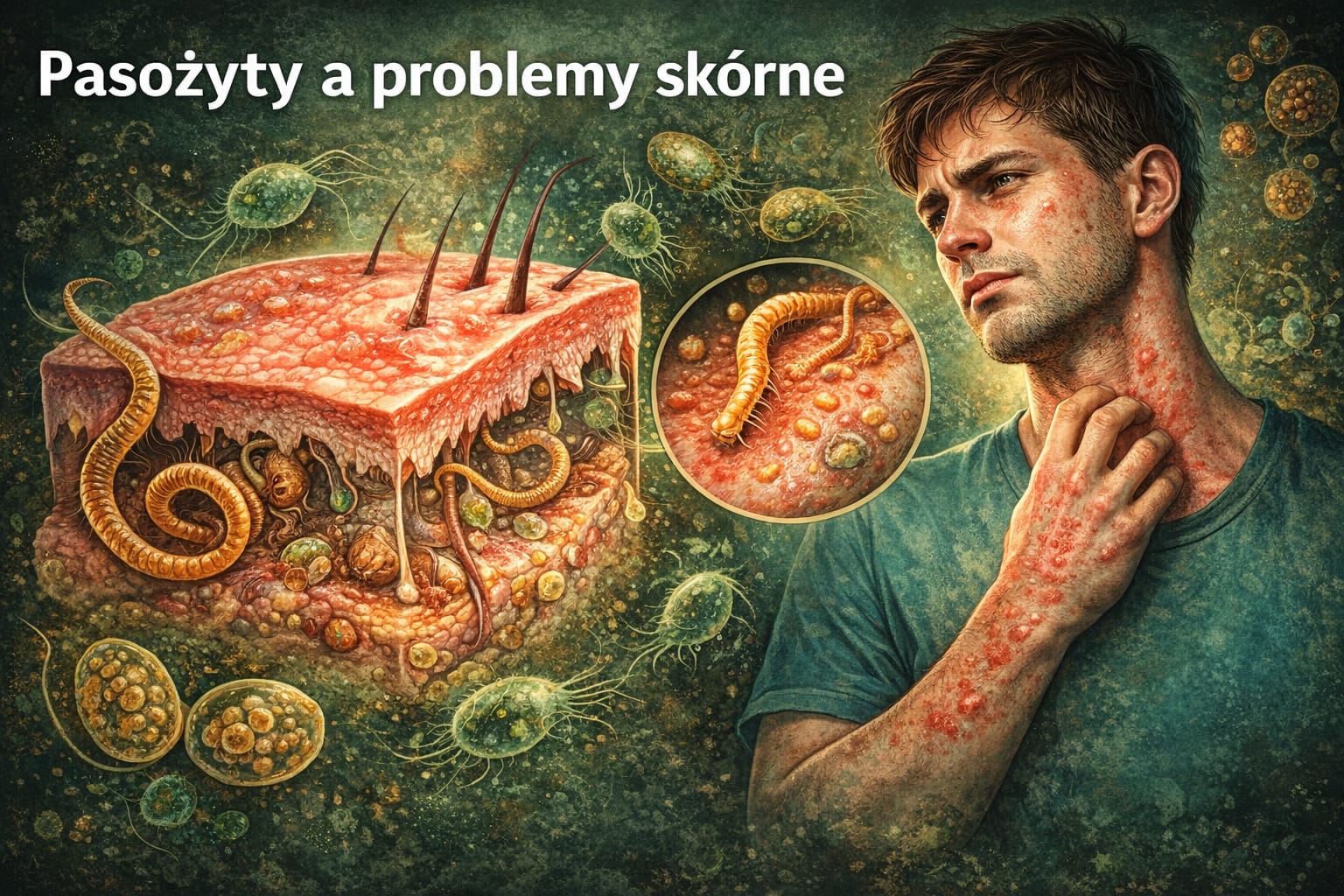
In the health literature, the topic of various skin symptoms is sometimes discussed in the context of the presence of parasites.
Such symptoms include:
However, it is worth noting that similar symptoms can have many different causes. The skin reacts to many factors, so when dealing with dermatological lesions, it is always necessary to consider various possible causes.
At the same time, the topic of skin is sometimes analyzed in the context of gut function and the immune system.
In recent years, there has been increasing talk about the so-called gut-skin axis. This means that the condition of the gut can affect the condition of the skin.
The intestines play a very important role in the body. Among other things, they are responsible for:
If the intestinal balance is disrupted, it can affect various processes in the body.
You can read more extensively about gut function in the article:
Parasites and intestinal problems
Some studies also discuss the effects of various microorganisms on the intestinal environment and its potential relationship to skin condition.
The microbiome is a community of microorganisms inhabiting the human body. The largest number of them is found in the intestines, but microorganisms are also present on the surface of the skin.
The microbiome has many important functions, such as:
Microbial imbalances can affect various aspects of health, including skin condition.
Therefore, the importance of the body’s microbial balance in the context of overall health is increasingly emphasized.
The immune system plays a key role in protecting the body from various microorganisms. In certain situations, immune reactions can affect the condition of the skin.
The skin is one of the components of the immune system and is the body’s first line of defense. Accordingly, immune reactions can manifest themselves in the form of skin lesions, among other things.
In the context of parasites, this topic is sometimes discussed in connection with the body’s reactions to the presence of various microorganisms.
The skin is an organ that is very sensitive to changes in the body. Its condition can be affected by, among other things:
For this reason, when dealing with skin problems, it is often recommended to look at the body in a holistic way.
This is because skin changes can be related to various processes inside the body.
The condition of the skin can be related to many lifestyle elements. Some of the most important include:
Healthy eating habits and attention to the body’s balance can support the proper functioning of many biological processes.
One important part of taking care of your health is being aware of how your body functions. Understanding what factors can affect the condition of the skin allows you to make more informed lifestyle decisions.
The skin often reflects the overall condition of the body, so its condition can be a signal that it is worth paying attention to various aspects of health.
The skin is one of the most important organs of the human body and often reflects the body’s processes. Skin changes can be related to many factors, such as diet, lifestyle, bowel function or immune system reactions.
In the context of health, the topic of a possible link between skin condition and the presence of parasites in the body also comes up. The health literature discusses various skin symptoms that can be analyzed in this context.
At the same time, it is worth remembering that skin problems can have many different causes. Therefore, it is always worth looking at the body in a holistic way and taking into account the various elements of lifestyle and the overall functioning of the body.
If you are interested in the topic of parasites and their effects on the body, it is also worth reading the other articles in this series, which discuss, among other things, the symptoms of the presence of parasites, the pathways of infection and their potential impact on various body systems.
1️⃣ Symptoms of parasites in humans
2️⃣ How parasite infection occurs – the most common routes of infection
3️⃣ Parasites and chronic fatigue – can they cause lack of energy?
4️⃣ Parasites and intestinal problems
5️⃣ Parasites and skin problems
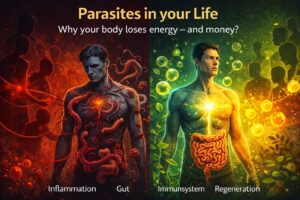
6️⃣ Parasites in your life
7️⃣ How to find out if you have parasites – symptoms and tests



We use cookies to improve your experience on our site. By using our site, you consent to cookies.
Manage your cookie preferences below:
Essential cookies enable basic functions and are necessary for the proper function of the website.
These cookies are needed for adding comments on this website.
Google Tag Manager simplifies the management of marketing tags on your website without code changes.
Statistics cookies collect information anonymously. This information helps us understand how visitors use our website.
Google Analytics is a powerful tool that tracks and analyzes website traffic for informed marketing decisions.
Service URL: policies.google.com (opens in a new window)
SourceBuster is used by WooCommerce for order attribution based on user source.