
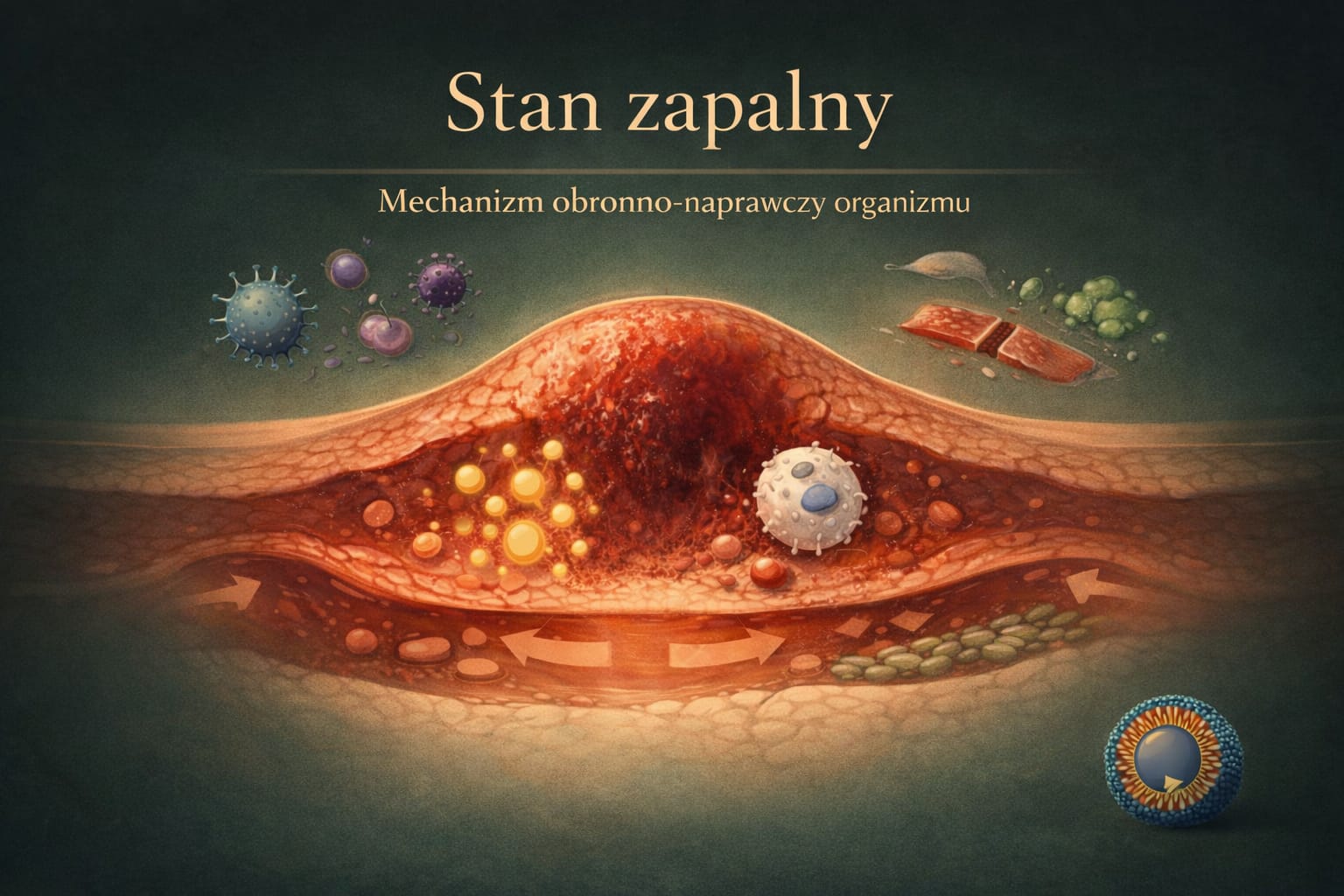
Inflammation is the body’s physiological defense response that is triggered in response to a threat or tissue damage.
Inflammation is a natural, biological defense and repair mechanism.
It is activated when the body recognizes a threat or damage.
It can be:
– Infection (bacteria, viruses)
– mechanical trauma
– tissue overload
– contact with toxins
– disruption of intestinal microbiota
– prolonged physiological stress
The purpose of this reaction is not to destroy the organism, but:
– neutralization of the irritant
– removal of damaged cells
– activation of regenerative processes
Inflammation is a protective program.
The problem only begins when it loses its balance.
When the threat is detected, the organism:
The symptoms we observe – redness, swelling, elevated temperature, pain – are the result of this biological mobilization.
This is a controlled, physiological process.
It is a quick, adequate reaction of the body.
An example would be a cut or an infection.
The body reacts, neutralizes the threat and extinguishes the process.
It appears when:
– the reaction lasts too long
– it is not properly extinguished
– the body is constantly exposed to factors that sustain tension (e.g. chronic oxidative stress, intestinal disorders, excess environmental stimuli)
In such a situation, the body can remain in a state of constant immune mobilization, which over time leads to an overload of regulatory mechanisms.
A healthy body goes through four phases:
It is the extinction stage that is crucial.
If the body cannot effectively move from the defense to the recovery stage, a state of prolonged biological tension may persist.
Inflammatory balance does not mean the absence of a response – it means the ability to regulate it.
One factor that sustains inflammation is excess free radicals, or oxidative stress.
We describe more about this mechanism in the article:
Oxidative stress – how it affects the body
Under conditions of equilibrium, the organism:
– produces free radicals (they are needed, among other things, in the immune response)
– while neutralizing their excess thanks to antioxidant systems
However, if free radical production exceeds the ability to neutralize them, inflammatory reactions and cellular damage can be prolonged.
A growing body of research indicates that the gut plays an important role in regulating the immune response.
Gut microbiota:
– influences the activity of immune cells
– participates in the production of metabolites that regulate inflammation
– affects the intestinal barrier
Disturbances in this area can promote the persistence of chronic inflammatory tension.
In practice, support for biological balance often includes broad-spectrum plant compounds, such as. betulin or curcumin.
It is worth emphasizing:
The purpose of conscious body support is not to “turn off” inflammation.
Inflammation is needed.
Support should focus on:
– modulation of immune response
– reduction of excess oxidative stress
– support of regenerative processes
– support of normal intestinal function
– improvement of overall biological immunity of the body
It’s a regulatory approach, not a blocking one.
Not only the composition, but also the form in which a substance is administered can make a difference in how it is used by the body.
We describe more about the technology itself in the article:
Liposomal herbal supplements – how they differ from classic extracts
In classical oral forms, some of the active ingredients:
– is degraded in the gastrointestinal tract
– has limited bioavailability
– is poorly absorbed
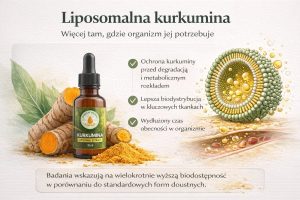
Liposomes are microscopic structures made of phospholipids, resembling cell membranes in structure.
Their task is:
– Surrounding the active ingredient
– protecting it from degradation in the digestive tract
– facilitating transport across cell membranes
In practice, this can mean:
– more efficient use of ingredients
– less loss of active ingredient
– possibility to use lower doses while maintaining biological support
So it’s not just about “power,” but about efficiency and accessibility for cells.
In the context of regulating inflammatory processes, this is important insofar as the body can receive support in a form more similar to natural biological structures.
This technology is also used in preparations based on plant compounds, such as NeuroHerb or detoxification formulas.
No form of supplementation can replace the basics:
– quality sleep
– balanced diet
– physical activity
– reducing chronic stress
– reducing exposure to environmental toxins
External support makes sense when it is accompanied by conscious work on the balance of the whole body.
Inflammation is a natural and necessary part of the body’s functioning.
He is not the enemy.
He is a tool for protection.
The key is:
– adequate response
– effective quenching of the process
– efficient transition to the regeneration phase
Conscious support should focus on restoring and maintaining biological balance, rather than aggressively suppressing natural defense mechanisms.
This article opens a series on the mechanisms of biological balance.
In future publications, we will combine knowledge of inflammatory processes, oxidative stress and bioavailability with a practical approach to supporting the body.
Related articles
If you are interested in the regulation of inflammatory processes and the body’s biological balance, see also:
Japanese knotweed – plant, compounds and bioavailability





We use cookies to improve your experience on our site. By using our site, you consent to cookies.
Manage your cookie preferences below:
Essential cookies enable basic functions and are necessary for the proper function of the website.
These cookies are needed for adding comments on this website.
Google Tag Manager simplifies the management of marketing tags on your website without code changes.
Statistics cookies collect information anonymously. This information helps us understand how visitors use our website.
Google Analytics is a powerful tool that tracks and analyzes website traffic for informed marketing decisions.
Service URL: policies.google.com (opens in a new window)
SourceBuster is used by WooCommerce for order attribution based on user source.