
Most people look at one thing: concentration.
The more milligrams on the label – the “better” the product.
The stronger the extract – the higher the expectations.
This approach stems from intuition: more substance should mean stronger action.
The problem is that the body does not act according to the label.
In practice, it is not only the amount of substance that matters, but:
This means that the high content of the active compound does not guarantee its use.
You can take in a large amount of a substance that will not be assimilated for the most part.
Or you can take in a smaller amount in a form that will be used effectively.
That’s the difference between administration and accessibility.
In classic plant extracts, the strategy is simple: increase concentration.
However, many bioactive compounds – especially polyphenols (such as curcumin, resveratrol and quercetin) – are characterized:
– low solubility,
– limited stability,
– rapid metabolism,
– and high losses at the intestinal and liver levels.
The result?
High number on the label, but low real-world effectiveness.
This is due to physiology and pharmacokinetics.
This is a key moment that is most often overlooked.
After oral administration, the substance goes through several stages:
And only then can it enter the bloodstream in active form.
Losses occur at each of these stages.
In practice, this means that even a well-prepared extract can lose much of its potential before the body has time to use it systemically [1].
In the case of many polyphenols:
This is why concentration alone is not proof of effectiveness.
Curcumin has very low oral bioavailability.
Reasons:
– poor absorption,
– rapid metabolism (glucuronidation, sulfation),
– rapid elimination.
In clinical trials, even high doses do not translate into high concentrations of the free form in the blood [2].
Resveratrol is well absorbed, but its systemic bioavailability is very low.
Why?
– rapid conversion to metabolites (glucuronides, sulfates),
– intensive metabolism already at the level of the intestine and liver.
Effect:
Much of the dose disappears before it reaches its active form in circulation [3].
Quercetin:
– has limited solubility,
– shows low absorption,
– is subject to intense metabolism.
Its bioavailability is variable and strongly depends on the form of administration [4].
The differences between the forms are not theoretical.
They are visible in parameters such as:
– Cmax – maximum blood concentration
– Tmax – time to reach
– AUC – total body exposure
– t½ (half-life)
In classic forms:
– Cmax is low,
– AUC limited,
– duration of action short.
In well-prepared carrier systems (e.g., lipids):
– There is an increase in AUC,
– an increase in Cmax,
– an increase in blood presence.
The final effect depends on the quality of the formulation – this determines whether the substance will actually be used by the body.
Full spectrum extracts contain a broad spectrum of naturally occurring compounds in the plant, including:
– cannabinoids,
– terpenes,
– flavonoids,
– polyphenols and other secondary metabolites.
Their importance is not just in their presence, but in the relationship between them.
From the point of view of biochemistry, they act as a dynamic system in which:
– some compounds modulate the activity of others,
– affect the enzymes responsible for metabolism,
– change solubility and transport,
– stabilize or enhance the biological effect.
This phenomenon is referred to as synergy.
However, this does not mean that every full spectrum extract automatically works better.
The key remains:
– the quality of the raw material,
– the method of extraction,
– and the form of administration.
Without the proper form, even a complex extract may have limited bioavailability.
Isolates are single, isolated chemical compounds of high purity.
They are obtained through processes such as
– selective extraction,
– crystallization,
– chromatography.
Their main advantage is control and precision.
They allow:
– accurate determination of dosage,
– standardization of formulation,
– study of specific mechanisms of action,
– predictability of effect under laboratory conditions.
For this reason, they are widely used in:
– scientific research,
– pharmacy,
– formulation design.
The limitation of an isolate is not its “quality,”
but its biological context.
In practice:
– lack of natural plant matrix,
– lack of transport support compounds,
– and fast metabolism
may limit its use by the body.
Therefore, isolates are a concentrated form of a single substance – but their effectiveness depends largely on the form in which they are administered.
Technology is not the goal.
It responds to the biological limitations of how the body processes substances.
In practice, many active compounds:
– have low solubility in water,
– are rapidly degraded,
– do not effectively pass through biological membranes,
– are rapidly metabolized and removed.
This means that even a well-chosen composition does not always translate into real action.
Liposomal and other lipid systems solve this problem by changing the physical form of the substance.
They work by, among other things:
– increasing solubility,
– protecting against degradation (e.g., enzymatic),
– facilitating transport across cell membranes,
– extending the time of presence in the body.
As a result, not only the quantity, but the kinetics of action change.
This means:
– higher maximum concentration (Cmax),
– longer duration of presence in the blood,
– more stable action profile.
In well-designed systems, one does not operate on assumptions, but on data.
The most common assessment is:
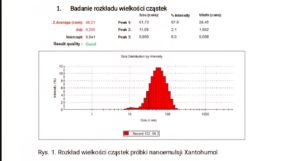
– particle size (e.g. DLS – dynamic light scattering),
– size distribution (PDI – homogeneity index),
– zeta potential (system stability),
– stability over time (storage tests),
– repeatability between production batches.
These are physical parameters to determine whether the formulation:
– is stable,
– is homogeneous,
– has a chance to retain its properties in practice.
Without this data, it is impossible to talk about the quality of the technology.
In practice, it’s not just one way.
It’s not about the choice:
– nature vs. technology,
– full spectrum vs. isolates.
It’s about understanding the mechanism.
You can combine:
– the complexity of full spectrum extracts,
– with the precision of isolated compounds,
– with technology that increases their availability.
These are not competing concepts.
These are the tools.
Their effectiveness depends on:
– how they are used,
– in what form,
– and in what biological context.
It is not only what is in the product that matters.
The key is:
– in what form it occurs,
– how it behaves in the body,
– and to what extent it can be used.
Only a combination of:
– raw material quality,
– its composition,
– its physical form,
– and bioavailability
gives a realistic picture of the action.
It’s not a choice between one or the other.
This is to understand how the elements work together.
[1] Sercombe et al., Advances and challenges of liposome assisted drug delivery, Frontiers in Pharmacology
[2] Anand et al., Bioavailability of curcumin, Molecular Pharmaceutics
[3] Walle, Bioavailability of resveratrol, Annals of the NY Academy of Sciences
[4] D’Andrea, Quercetin: therapeutic applications, Phytotherapy
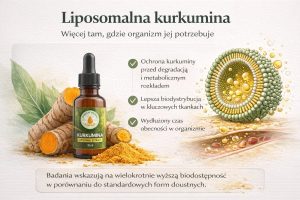
If you want to understand the topic in more depth, see what it looks like in practice: from nanoscale technology, through specific examples like liposomal curcumin, to the differences between liquid and powder forms.
If this topic is of interest to you – leave your email.


We use cookies to improve your experience on our site. By using our site, you consent to cookies.
Manage your cookie preferences below:
Essential cookies enable basic functions and are necessary for the proper function of the website.
These cookies are needed for adding comments on this website.
Google Tag Manager simplifies the management of marketing tags on your website without code changes.
Statistics cookies collect information anonymously. This information helps us understand how visitors use our website.
Google Analytics is a powerful tool that tracks and analyzes website traffic for informed marketing decisions.
Service URL: policies.google.com (opens in a new window)
SourceBuster is used by WooCommerce for order attribution based on user source.