
Parasites have accompanied humans for thousands of years as organisms that use other organisms to survive. In the natural environment, they are part of the ecosystem, but in the human body they can lead to various biological imbalances.
In many cases, the presence of parasites in the body proceeds without obvious symptoms or gives very non-specific symptoms. For this reason, many people for a long time do not connect certain ailments with the possibility of the presence of parasitic organisms.
Fatigue, digestive problems, bloating, appetite fluctuations or difficulty concentrating can have many different causes. One of them – although often overlooked – can be the very presence of parasites in the body.
However, it is worth noting that similar symptoms can result from a number of factors related to lifestyle, diet, stress or intestinal microbial imbalances. Therefore, in the case of long-term health problems, it is always worth looking at the body in a holistic way.
In this article, we will look at this:
Parasites are organisms that live at the expense of another organism, using it as a habitat and source of nutrients. In the world of biology, parasitism is a common phenomenon and occurs in many ecosystems.
In humans, various types of parasites are most common, including:
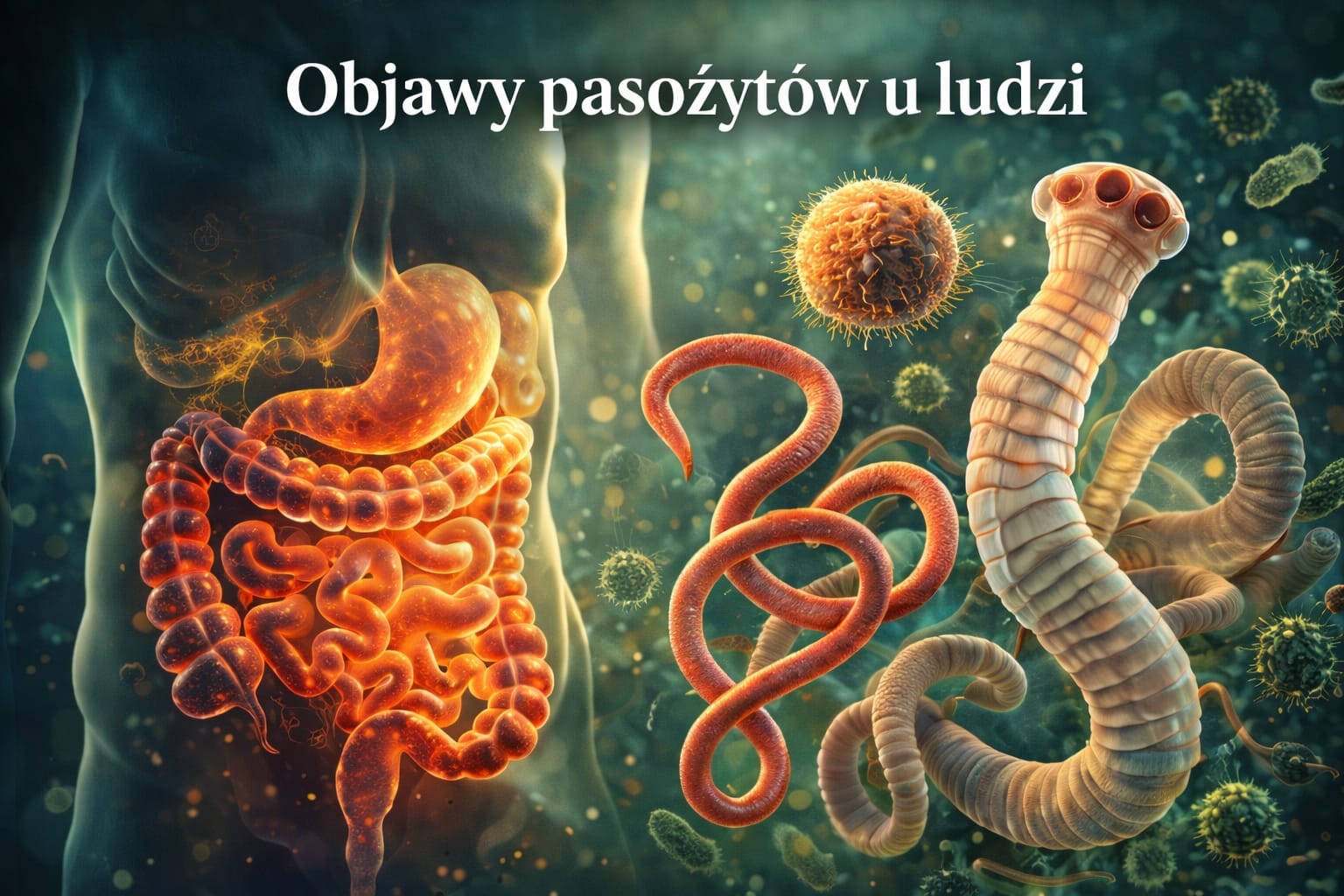
Many of them develop in the intestines, where they have access to nutrients supplied with food. However, their impact is not always limited to the gastrointestinal tract.
The human body is a complex biological system in which many processes are interrelated. For this reason, disorders in one area can also affect other systems.
Therefore, the symptoms associated with the presence of parasites can be very diverse and not always easy to interpret clearly.
One reason parasites can sometimes be difficult to detect is that their symptoms can resemble many other ailments.
In the initial stage of the presence of parasites, symptoms are often very subtle and may include, for example:
Many people attribute such symptoms to daily stress, fatigue or dietary changes.
In addition, the human body has numerous adaptive mechanisms that can compensate for various types of disorders over a period of time. This allows a person to function normally even when there are certain abnormalities in the body.
Only after a longer period of time do more noticeable symptoms appear, which can prompt a search for the cause of the problem.
Symptoms of parasites in humans can vary widely. Much depends on the type of parasite, the number of organisms and overall health.
Some of the most commonly described symptoms include:
However, this does not mean that each of these symptoms is directly related to the presence of parasites. In practice, similar symptoms can have many different causes.
Therefore, it is crucial to observe the whole picture of the body’s functioning, not just a single symptom.
The digestive system is the place where parasites most often thrive. The intestines provide an environment conducive to their survival, as nutrients and suitable biological conditions are found there.
For this reason, some of the most commonly reported symptoms are various types of digestive problems.
Among the most commonly observed are:
These symptoms may appear periodically and are not always very severe. For a long time, many people attribute it to other factors, such as diet, lack of meal regularity or stress.
However, in some cases, they may indicate intestinal imbalances.
The human intestines are inhabited by a huge number of microorganisms that make up the so-called gut microbiome.
It is estimated that there are up to tens of trillions of bacteria in the human digestive tract, which perform very important functions for the body.
The microbiome is involved in, among other things:
A growing body of research also points to a link between the gut microbiome and nervous system function.
For this reason, gut microbial imbalances can affect not only digestion, but also overall well-being.
One of the symptoms sometimes described by people with intestinal imbalances is chronic fatigue.
Fatigue can arise from many different causes, but in some cases it is associated with impaired nutrient absorption.
If the body does not fully absorb vitamins, minerals and other nutrients, it can lead to feelings of weakness and decreased energy.
Symptoms of fatigue may include, but are not limited to:
In such situations, it is worth paying attention to the general condition of the body and the functioning of the digestive system.
A growing body of scientific research points to a close link between gut function and the nervous system. This relationship is sometimes referred to as the gut-brain axis, or the communication system between the gastrointestinal tract and the brain.
The intestines are one of the most biologically active organs in the body. They house a huge number of neurons and immune system cells. For this reason, any imbalance in the gut can also affect the functioning of the nervous system.
Some people describe symptoms such as:
These symptoms are not exclusive to the presence of parasites and can have many other causes. However, intestinal imbalances can affect overall well-being and mental energy levels.
For this reason, increasing attention is being paid to the importance of gut health for the functioning of the entire body.
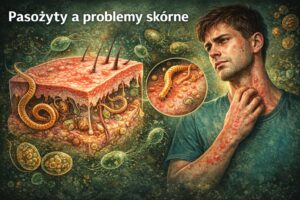
The skin is the largest organ of the human body and often reflects the health of the body. In many cases, skin changes can be one of the signals indicating biological imbalances.
Skin symptoms that are sometimes observed with various types of intestinal disorders include:
The skin is strongly linked to the immune system. If there is inflammation or microbial imbalance in the body, skin reactions can be one of the first visible signals.
However, it is worth remembering that skin problems can have many causes – from environmental factors to allergies or hormonal disorders. Therefore, they should always be analyzed in the broader context of the health of the entire body.
Parasites are found in the environment all over the world. Their presence in nature is a completely natural phenomenon and affects many animal species.
Parasite infection can occur in a variety of ways. Most often, it is associated with contact with food, water or the environment, where spore forms of parasites may be present.
The most common routes of contact with parasites include:
In many cases, the human body copes with such contacts through immune mechanisms. However, sometimes a situation can arise in which parasites find conditions conducive to survival.
One reason why the presence of parasites can sometimes be difficult to spot is that symptoms can appear gradually.
The human body has many adaptive mechanisms that help maintain biological balance even in situations of certain disturbances.
As a result, a person may not notice any obvious symptoms for a long time.
Only when the body’s balance is more disturbed can symptoms such as:
That is why it is so important to watch the signals sent by the body.
The immune system is one of the body’s most important defense systems. Its task is to recognize and neutralize potentially harmful agents, including microorganisms.
It is worth knowing that a significant part of the cells of the immune system are located right in the intestines. This makes the health of the gastrointestinal tract extremely important for immune function.
If the microbial balance of the gut is disrupted, the immune system’s response can also be affected.
That’s why it is increasingly being said that taking care of gut health is one of the key elements in supporting the body’s immunity.
The human body is a system in which many processes are interrelated. The digestive system, the immune system and the nervous system work together to form a complex web of relationships.
For this reason, in the context of health, there is increasing talk of the need to look at the body in a holistic way.
The biological balance of the body depends on, among other things:
All of these factors can affect the functioning of the body and its ability to maintain a stable internal environment.
The human body constantly sends out all sorts of signals indicating its condition. They are often subtle and easy to ignore, especially in the daily rush.
Many people for a long time do not pay attention to such symptoms as:
Only when the symptoms become more bothersome do they begin to think about possible causes.
However, it is worth remembering that the body usually signals certain disorders much earlier. For this reason, the importance of careful observation of one’s own body is increasingly emphasized.
Regular attention to aspects such as digestion, energy levels and sleep quality can help you notice changes in your body earlier.
The biological balance of the body depends on many lifestyle factors. Today’s pace of life, stress and improper eating habits can affect the functioning of many systems in the body.
Factors that are particularly important for intestinal health include:
The intestines are one of the most important components of the immune system, so their condition affects the functioning of the entire body.
A growing body of scientific research indicates that the microbial balance of the gut may be important for many metabolic and immune processes.
The topic of parasites has been of great interest to both scientists and those interested in health for many years.
One reason is that parasites are part of the natural biological environment and are found in various ecosystems around the world.
Contact with microorganisms is a natural phenomenon and has accompanied humans since the beginning of time. At the same time, modern lifestyles are causing more and more attention to be paid to the importance of the biological balance of the body.
This is why the topic of gut health, the microbiome and the various factors affecting the body has become the subject of much scientific research in recent years.
Parasites are found in the environment all over the world, so contact with them is possible in many situations related to everyday life.
However, this does not mean that every contact leads to the permanent presence of parasites in the body. The immune system and the body’s natural defenses often cope with various microorganisms.
Don’t. In many cases, symptoms can be very subtle or nonspecific.
Some of the most commonly described include:
However, similar symptoms can have many other causes, so it is always worth analyzing them in the broader context of health.
Not always. Much depends on the type of parasite, the number of organisms and the overall health of the person.
The human body has numerous defense mechanisms that help maintain biological balance.
Yes. Gastrointestinal problems can result from a number of factors, such as:
Therefore, in the case of long-term ailments, it is worth paying attention to the entire lifestyle and functioning of the body.
Parasites are a natural part of the biological environment and can affect the human body in various ways.
Symptoms of their presence can vary widely and are often not clear-cut. The most commonly described include:
However, it is worth remembering that similar symptoms can have many different causes. Therefore, in the case of long-term health problems, it is always worth paying attention to the overall condition of the body, lifestyle and biological balance.
Gut health, the microbiome, and immune system function are closely linked and play an important role in maintaining the body’s balance.
If you’re interested in the topic of parasites and their effects on the body, it’s also worth exploring other articles discussing the issue more broadly.
1️⃣ Symptoms of parasites in humans
2️⃣ How parasite infection occurs – the most common routes of infection
3️⃣ Parasites and chronic fatigue – can they cause lack of energy?
4️⃣ Parasites and intestinal problems
5️⃣ Parasites and skin problems
6️⃣ Parasites in your life
7️⃣ Human flukes – parasites of the liver and biliary tract. Symptoms, infection and diagnosis
.
If this topic is important to you
Leave your email – I’ll let you know when there are new articles
and materials on the site.
No spam. Only valuable content.



We use cookies to improve your experience on our site. By using our site, you consent to cookies.
Manage your cookie preferences below:
Essential cookies enable basic functions and are necessary for the proper function of the website.
These cookies are needed for adding comments on this website.
Google Tag Manager simplifies the management of marketing tags on your website without code changes.
Statistics cookies collect information anonymously. This information helps us understand how visitors use our website.
Google Analytics is a powerful tool that tracks and analyzes website traffic for informed marketing decisions.
Service URL: policies.google.com (opens in a new window)
SourceBuster is used by WooCommerce for order attribution based on user source.