
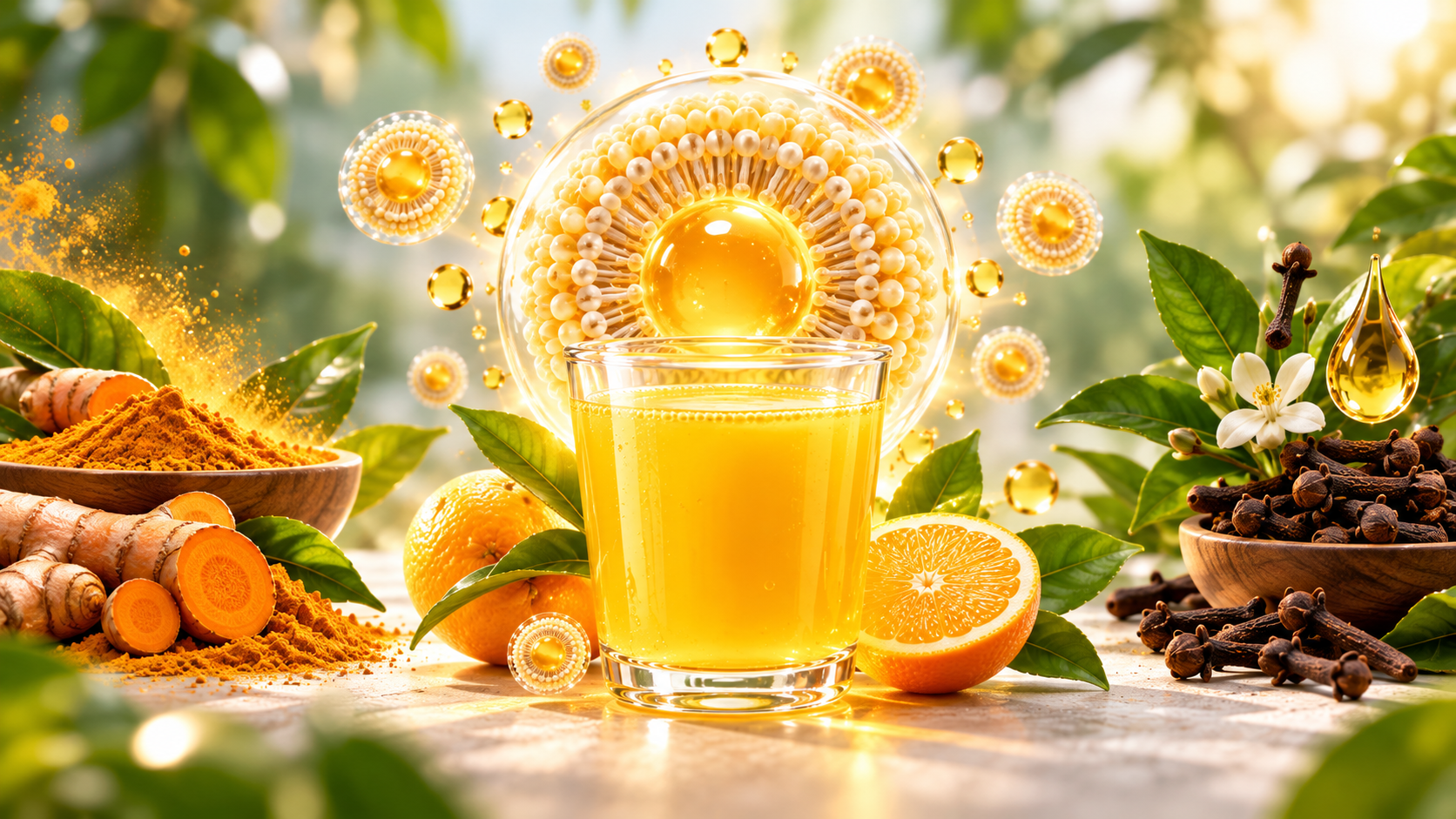
Vitamin C is one of the best-known nutrients associated with the proper functioning of the immune system. Eugenol, on the other hand, is a natural plant compound primarily associated with the characteristic aroma of cloves.
At first glance, these are two completely different ingredients. However, when we take a closer look at the research on eugenol, the combination becomes much more interesting.
Antioxidant activity, bacteria, Candida fungi, biofilm, and oral microorganisms—these are just some of the areas in which eugenol is the subject of scientific research.
So why did the combination of vitamin C, natural eugenol, and liposomal technology pique our interest?
Vitamin C helps the immune system function properly, but its importance to the body goes far beyond that.
Vitamin C:
The antioxidant function of vitamin C is particularly interesting in the context of eugenol.
Oxidative stress is a natural part of the body’s functioning. It is important to maintain a balance between the production of reactive oxygen species and the body’s natural antioxidant systems’ ability to neutralize them.
We discuss this topic in more detail in our article:
→ Oxidative stress – why might the bioavailability of antioxidants be more important than their dose?
https://liposomefactory.com/stres-oksydacyjny/
Eugenol is a natural phenolic compound found in various plants. It is particularly characteristic of the clove tree (Syzygium aromaticum) and is one of the main components of clove oil.
It is this ingredient that is largely responsible for the intense, spicy aroma of cloves.
Eugenol has long been used, among other things, as a flavoring agent and in dentistry. At the same time, it continues to be the subject of numerous studies on its biological activity.
The scientific literature describes, among other things, its properties:
It is precisely this diversity that makes eugenol a much more interesting molecule than its use as a natural flavoring alone would suggest.
The extensive research on eugenol does not mean that it should be used on its own in any amount.
Eugenol is a concentrated, biologically active compound, and in its case—as with many other natural substances— dose is critical. In the amounts used as a flavoring agent, it is a well-known food ingredient; however, excessive exposure can lead to adverse effects. The toxicological literature describes, among other things, the possibility of liver damage in cases of significant overdose.
Therefore, the research on eugenol described in this article should not be interpreted as an encouragement to consume pure eugenol or concentrated clove oil on your own.
In a finished formulation, it is not only the presence of a specific ingredient that matters, but also its concentration, serving size, method of administration, and the characteristics of the formulation as a whole.
That is precisely why, at Liposomal Herb, we are not interested in maximizing the amount of individual ingredients, but rather in developing well-thought-out formulations and further characterizing them.
More doesn’t always mean better.
One of the most thoroughly studied areas of research on eugenol is its antioxidant activity.
Eugenol has a characteristic phenolic structure that enables it to participate in reactions related to the neutralization of free radicals.
Scientific publications describe its effect on the redox status of cells and various mechanisms related to oxidative stress. Recent literature reviews also analyze the links between the antioxidant activity of eugenol and inflammatory processes.
This creates an interesting contrast with vitamin C—one of the most important water-soluble antioxidants found in the human diet.
One interesting area of research is the effect of eugenol on Staphylococcus aureus, commonly known as golden staph.
Both methicillin-sensitive (MSSA) and methicillin-resistant (MRSA) strains were studied.
In laboratory studies, concentration-dependent inhibition of S. aureus biofilm formation was observed. The effect of eugenol on existing biofilms, the bacterial cell membrane, and the expression of genes associated with biofilm formation was also analyzed.
This is a particularly interesting area of research because bacteria living in a biofilm can behave very differently from individual bacterial cells.
A biofilm can be thought of as an organized community of microorganisms surrounded by a matrix they have produced.
It can form on both biological and non-biological surfaces—ranging from tissues and tooth surfaces to various types of materials.
In such a structure, microorganisms may be better protected from environmental influences than individual, free-living cells.
For this reason, increasing attention is being paid to natural substances that can affect not only the growth of microorganisms, but also their:
Eugenol is one of the compounds currently being studied in this regard.
Research on yeasts of the genus Candida, particularly Candida albicans, is also a very interesting area.
C. albicans can exist in various morphological forms and is capable of forming a biofilm.
In laboratory studies, eugenol demonstrated activity against Candida albicans, including cells within a biofilm.
Among other things, the following effects were observed:
The effect of eugenol on already-formed Candida albicans biofilms was also studied. The experiments revealed changes in the biofilm structure and effects on the cells forming the biofilm.
This shows that the antifungal properties of eugenol are a much broader area of research than simply its effect on the growth of individual cells.
Eugenol has a long history of use in dentistry.
At the same time, the oral cavity is an extremely complex microbial environment in which bacteria and fungi coexist and can form extensive biofilms.
One of the microorganisms studied is Streptococcus mutans —a bacterium associated with the formation of biofilm on the surface of teeth and the development of dental caries.
The studies examined the effects of eugenol on, among other things, S. mutans adhesion, biofilm formation, and the expression of genes associated with biofilm formation and interbacterial communication.
Porphyromonas gingivalis —one of the key microorganisms associated with periodontal disease—was also studied. In experiments, eugenol exhibited antibacterial activity and inhibited biofilm formation.
Even more interesting are the experiments involving mixed biofilms.
Among other things, the study examined biofilms formed jointly by Candida albicans and Streptococcus mutans. Eugenol exhibited concentration-dependent activity against both single-species and mixed biofilms.
This demonstrates that the microbial environment of the oral cavity remains an interesting area of research on eugenol.
The formula is supplemented with a small amount of curcumin —a natural polyphenol found in turmeric (Curcuma longa).
In our formula, it gives the product a natural, golden-yellow color, eliminating the need for synthetic dyes.
At the same time, curcumin contributes more than just color to the formulation. It is one of the best-studied plant polyphenols, extensively researched for its antioxidant properties and its effects on inflammatory processes, among other things.
In this way, even the natural color becomes a functional element of the overall composition.
From a technological standpoint, this is a very interesting combination.
Vitamin C is a hydrophilic compound—it interacts well with an aqueous environment.
Eugenol, on the other hand, is more lipophilic and is poorly soluble in water.
Phospholipids are found between them.
Their molecules have both hydrophilic and lipophilic parts. This allows them to form structures that enable substances with very different physicochemical properties to be combined into a single system.
And this is where liposomal technology comes into play.
Liposomes are structures formed from phospholipids—compounds similar to the components of natural cell membranes.
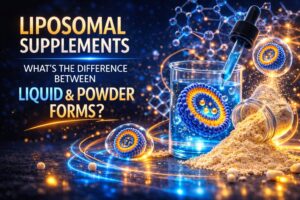
Liposomal technologies are used as delivery systems for both hydrophilic and lipophilic compounds.
In the case of vitamin C, clinical studies are already available showing that a properly developed liposomal formulation can significantly alter its pharmacokinetics and increase its bioavailability.
A review of studies on liposomal vitamin C, published in 2025, analyzed 10 studies comparing its absorption with that of non-liposomal forms. In 9 of the 10 studies, liposomal formulations were found to have higher bioavailability.
Depending on the formulation tested, the maximum plasma concentration of vitamin C (Cmax) was 1.2 to 5.4 times higher, and exposure, measured as AUC, was 1.3 to 7.2 times greater.
In one randomized crossover study, a specific phospholipid formulation of vitamin C achieved an AUC approximately 5.9 times higher than that of standard ascorbic acid.
However, the wide range of these results highlights something equally important: not all liposomal formulations are the same.
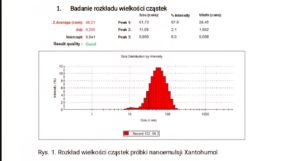
One of the key parameters is Encapsulation Efficiency (EE%)—that is, the proportion of the active substance bound or encapsulated within the carrier structures relative to its total amount present in the formulation.
The mere presence of phospholipids or the achievement of small particle sizes does not necessarily mean that the active substance has been effectively encapsulated.
Therefore, when characterizing a liposomal formulation, the following factors, among others, are all important:
Only by comparing these parameters can we describe the developed delivery system much more fully than simply referring to the product as “liposomal.”
Therefore , the term “liposomal” alone does not determine the quality of a formulation. What matters are the type of phospholipids, the manufacturing process, the characteristics of the particles, the efficiency of encapsulation, and the stability of the final system.
We discuss the use of lipid technologies for plant-based substances in more detail here:
→ Liposomal plant extracts—how do they differ from traditional extracts?
https://liposomefactory.com/liposomalne-ekstrakty-roslinne/
In the Liposomal Herb formula, we use natural, food-grade eugenol.
It acts as a natural flavoring agent and gives the product its characteristic, slightly clove-like note.
However, it is also of interest to us because of the wide range of research being conducted on this molecule.
We combine it with vitamin C, sunflower phospholipids, and a small amount of curcumin, which gives the product its natural golden-yellow color, in a liquid liposomal formula.
Behind a seemingly simple composition may lie much more complex technology. That is why we subject our formulations to a series of physicochemical and stability tests.
However, we do not intend to stop there. Another area of development is pharmacokinetic research, which will allow us to evaluate how our formulations behave in the body and compare them with conventional forms of the same substances.
This is a natural next step for us: from developing and characterizing the formulation to verifying how the technology we’ve applied affects its behavior in the body.
Liposomal Herb – where science meets nature.
→ View product: Liposomal Vitamin C + Eugenol
1. Damasceno R.O.S. et al. (2024)
Anti-Inflammatory and Antioxidant Activities of Eugenol: An Update
Pharmaceuticals, 17(11), 1505.
https://pubmed.ncbi.nlm.nih.gov/39598416/
2. Barboza, J.N., et al. (2018)
An Overview of the Anti-inflammatory Potential and Antioxidant Profile of Eugenol
Oxidative Medicine and Cellular Longevity, 2018, 3957262.
https://pubmed.ncbi.nlm.nih.gov/30425782/
3. He M., Du M., Fan M., Bian Z. (2007)
In vitro activity of eugenol against Candida albicans biofilms
Mycopathology , 163(3), 137–143.
https://pubmed.ncbi.nlm.nih.gov/17356790/
4. Khan M.S.A. et al.
Antibiofilm activity of certain phytocompounds and their synergy with fluconazole against Candida albicans biofilms
A study of the effect of plant compounds, including eugenol, on C. albicans biofilms.
https://pubmed.ncbi.nlm.nih.gov/22167241/
5. Yadav, M.K., et al. (2015)
Eugenol: a phytochemical effective against biofilms formed by clinical strains of methicillin-resistant and methicillin-sensitive Staphylococcus aureus
A study examining biofilms formed by clinical strains of MRSA and MSSA.
https://pubmed.ncbi.nlm.nih.gov/25781975/
6. Elgabali E. et al.
Assessment of the inhibitory effect of eugenol on biofilm formation and biofilm gene expression in clinical isolates of methicillin-resistant Staphylococcus aureus in Egypt
A study of clinical MRSA isolates and the expression of genes associated with biofilm formation.
https://pubmed.ncbi.nlm.nih.gov/33444856/
7. Adil M., Singh K., Verma P.K., Khan A.U.
Eugenol-induced suppression of biofilm-forming genes in Streptococcus mutans: An approach to inhibit biofilms
A study of the effect of eugenol on Streptococcus mutans and the mechanisms of biofilm formation.
https://pubmed.ncbi.nlm.nih.gov/27873689/
8. Zhang, Y., et al.
Antibacterial and antibiofilm activities of eugenol from the essential oil of Syzygium aromaticum against the periodontal pathogen Porphyromonas gingivalis
A study of eugenol’s activity against bacteria associated with periodontal disease and their biofilm.
https://pubmed.ncbi.nlm.nih.gov/29101062/
9. Systematic review (2024)
Eugenol as a promising antibiofilm and anti-quorum sensing agent: A systematic review
A review of studies on the effects of eugenol on biofilm, quorum sensing, and bacterial virulence factors.
https://pubmed.ncbi.nlm.nih.gov/39293727/
10. Jafri H. et al. (2019)
In vitro efficacy of eugenol in inhibiting single and mixed-biofilms of drug-resistant strains of Candida albicans and Streptococcus mutans
Study of single and mixed biofilms of Candida albicans and Streptococcus mutans .
https://pubmed.ncbi.nlm.nih.gov/30668370/
11. A review of studies on the bioavailability of liposomal vitamin C (2025)
A review of studies comparing liposomal and non-liposomal formulations. The analyzed studies reported a range of approximately 1.2–5.4× for Cmax and 1.3–7.2× for AUC, depending on the specific formulation.
https://pubmed.ncbi.nlm.nih.gov/40506693/
12. A randomized crossover study of a phospholipid formulation of vitamin C
The test formulation showed an AUC approximately 5.9 times higher than that of standard ascorbic acid.
https://pmc.ncbi.nlm.nih.gov/articles/PMC9044018/
This material is for educational purposes. The information regarding eugenol and curcumin presents the results of scientific research on these compounds and does not constitute a claim regarding the therapeutic properties of a dietary supplement.


We use cookies to improve your experience on our site. By using our site, you consent to cookies.
Manage your cookie preferences below:
Essential cookies enable basic functions and are necessary for the proper function of the website.
These cookies are needed for adding comments on this website.
Google Tag Manager simplifies the management of marketing tags on your website without code changes.
Statistics cookies collect information anonymously. This information helps us understand how visitors use our website.
Google Analytics is a powerful tool that tracks and analyzes website traffic for informed marketing decisions.
Service URL: policies.google.com (opens in a new window)
SourceBuster is used by WooCommerce for order attribution based on user source.