
In the previous text we showed the difference between staying in the process and closing it. Now it’s worth going down a level and seeing what this difference looks like in the practice of working with the body, especially at the interface between diagnostics and real biological intervention.
Because this is where misunderstandings most often occur.
Diagnostics is a tool.
It is supposed to show what is currently happening in the body, where the process is going and where the real burdens are.
Diagnostics – is not yet a decision.
It is a moment of information gathering, which only in the context of the whole process becomes meaningful.
The problem begins when diagnostics ceases to be a preliminary step and becomes the center of the entire operation.
In practice, this means that:
The body is regularly tested
results are discussed
minor adjustments are made
after which the cycle begins again
Without a clear moment of transition to the solution.
At some point, any work with the body comes to a point where a decision must be made.
Whether the goal is further observation and regulation
or a specific intervention, after which the body is likely to stabilize
This is not a question about the tool.
This is a question about the working model.
In the observational model, changes are often subtle and stretched out over time.
In the intervention model, it is assumed that the body, after receiving the right support, can return to equilibrium on its own.
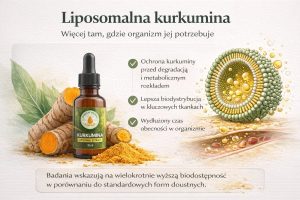
Liquid preparations, including liposomal forms, are not an end in themselves.
They are a means to enable the body to do a job it did not have the conditions for before.
Their role is not to “guide” the body, but to:
reduce loads
facilitate biological processes
create space for stabilization
Therefore, in a solution-oriented approach, the preparation is not used indefinitely.
It is used at a specific time, in a specific context and with a clear purpose.
Closing the process does not mean that the body will never need support again.
Means that a particular problem no longer dominates.
This is a fundamental difference.
Instead of keeping a person in a constant relationship with the procedure,
allows him to return to normal functioning, without feeling that “something constantly needs to be regulated.”
This work model requires more than tools.
It requires responsibility on both sides.
On the side of the person running
and on the side of the person who decides to act.
Not everyone wants to shut down processes.
Not everyone is ready for that.
But it is worth knowing that this possibility exists.
The differences in working with the body are not due to technology or fashion.
They come from deciding whether the goal is a process or a solution.
Diagnosis makes sense when it leads to action.
Preparations make sense when they are used consciously.
And working with the body becomes fully meaningful when it can complete.
In the previous text, we showed the difference between staying in the process and closing it.



We use cookies to improve your experience on our site. By using our site, you consent to cookies.
Manage your cookie preferences below:
Essential cookies enable basic functions and are necessary for the proper function of the website.
These cookies are needed for adding comments on this website.
Google Tag Manager simplifies the management of marketing tags on your website without code changes.
Statistics cookies collect information anonymously. This information helps us understand how visitors use our website.
Google Analytics is a powerful tool that tracks and analyzes website traffic for informed marketing decisions.
Service URL: policies.google.com (opens in a new window)
SourceBuster is used by WooCommerce for order attribution based on user source.